Model fabrication based on a digital "impression"
Digital solutions are gaining more and more ground in the making of restorations as well, and can offer a real alternative to analogue technologies in more and more areas. We have been using laboratory scanners and CAD programs successfully for years to design restorations, whether that is a crown, bridge, custom abutment, metal framework, denture or even a therapeutic splint. What these have in common is that the clinical work, the impression taking, does not differ according to whether the laboratory produces the restoration by an analogue or a digital procedure.
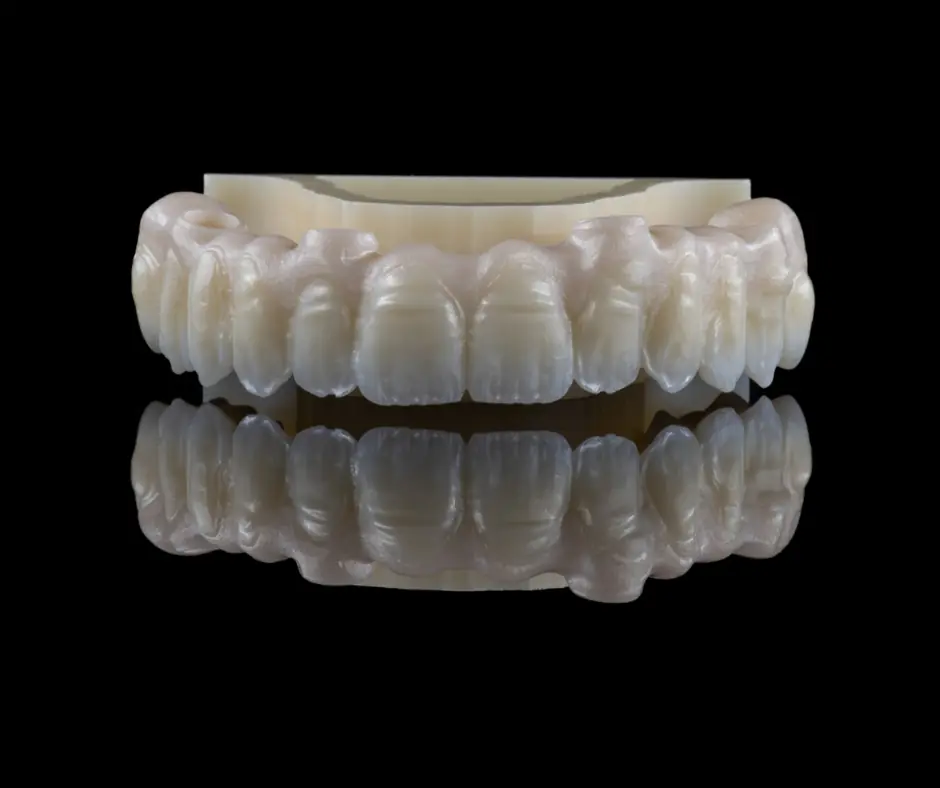
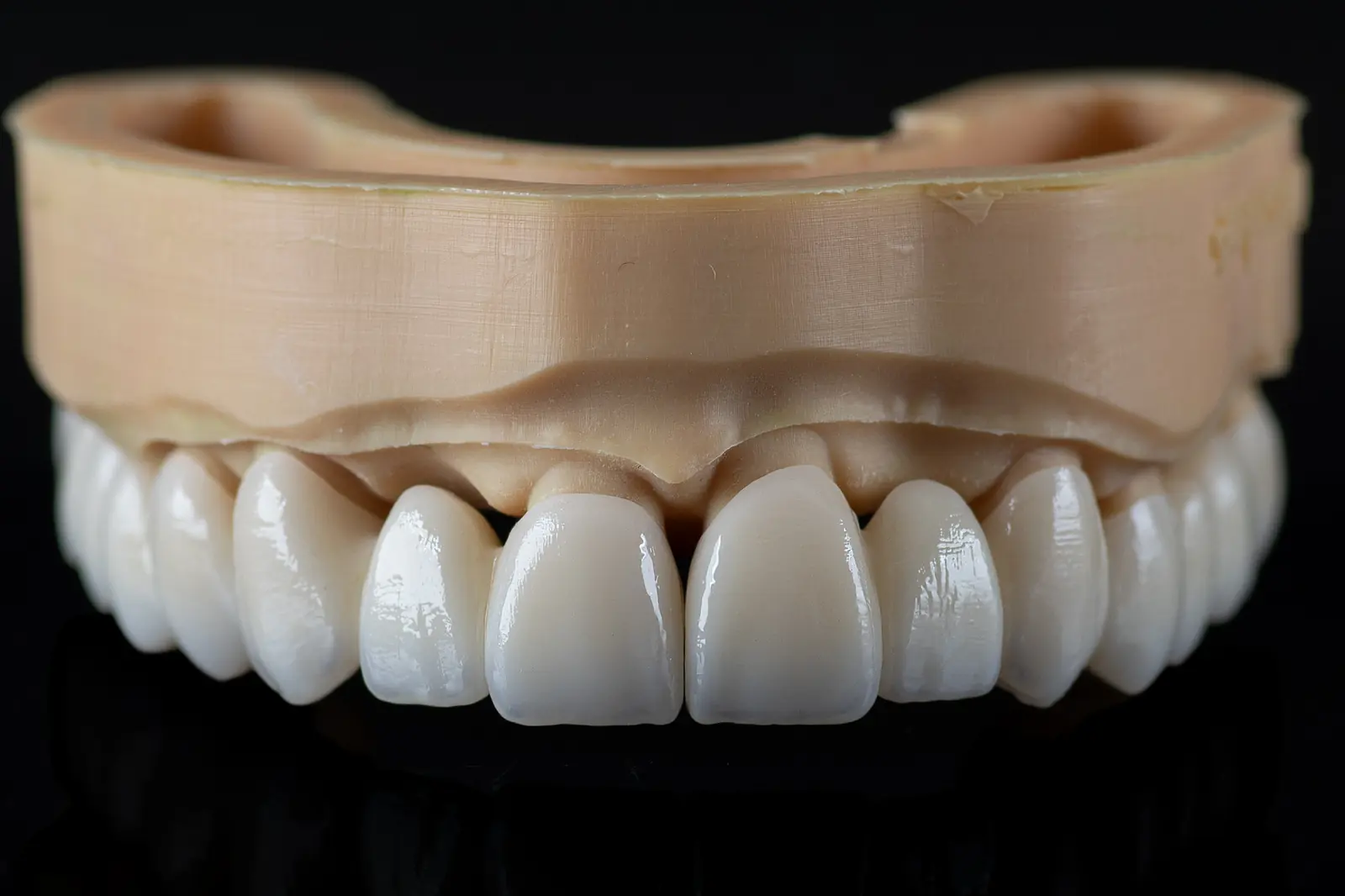
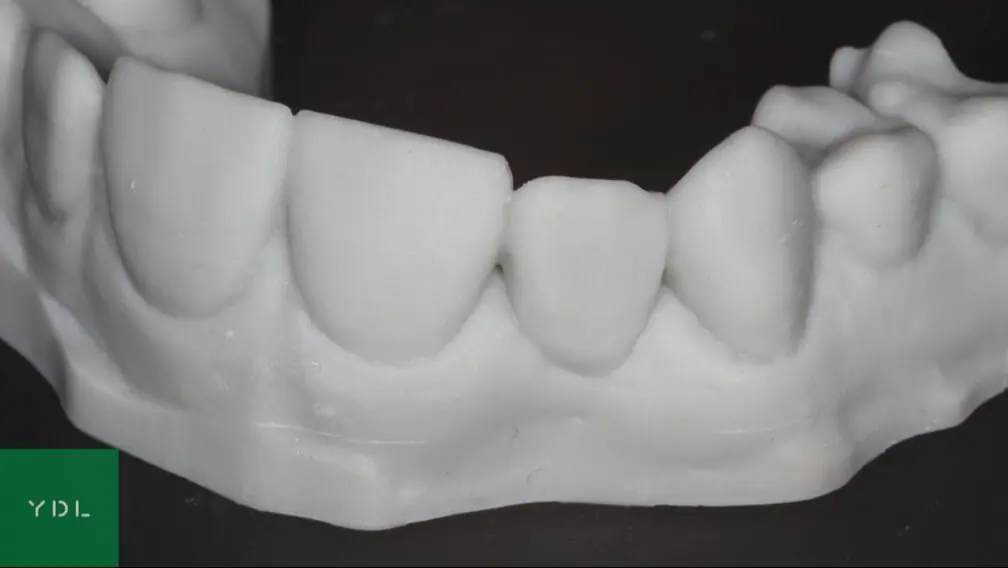
However, impression taking can now also be done digitally. More and more intraoral scanners are being installed in Hungary as well. Some only store their study impressions digitally, others run a smile bank. But the use that affects dental laboratories is already under way: clear aligners are being made, along with restorations on natural teeth and now on implants too. Laboratories therefore have to be able to make models from digital impressions as well, since clear aligners have to be thermoformed on a model, and the articulation relationships and contact points of restorations can only be established properly on a mounted model. 3D printing offers a solution for this.
From a digital impression we can also make several types of model; in this case, however, alongside the restorations we also have to design the model itself digitally, since the impression here is nothing other than a three-dimensional surface, which for example has no material thickness, may contain parts we do not need at all, and may be incomplete in places. For this we first have to be able to receive the scanned files and have a dental model design software, whether we call it Model Builder or Model Creator.
The types of 3D printed models:
antagonist / study / wax-up models
Geller models
implant analogue models
What requirements do we set for a printed model?
The same minimums have to be met as for a stone model, that is, it should be
dimensionally accurate
free of distortion
sufficiently hard and resistant
the removable dies should fit accurately and verifiably in place
there should be a flexible artificial gingiva around the implant analogues
it should be possible to mount the centric relation in an articulator
Beyond dimensional accuracy, attention has to be paid to richness of detail, that is, to printing resolution, since it is of no use having a high-resolution scanned arch if the model made from it is only a simplified physical equivalent of it. This is particularly important because the finishing work still has to be carried out on the physical model — think only of thinning crown margins, any veneering, or establishing contact points. Purely by digital means, without conventional finishing done by hand, it is unimaginable that a restoration that has been carved, printed or produced in any other way would meet our expectations.
Both the analogue and the digital procedure have their own advantages and disadvantages; at the present moment the two paths can also be followed in parallel.