Articulation at average values
Precise preparation, impressions, "bite", quality models. What next?
First we have to record the centric relation, that is, the relationship of the two jaws to each other in the resting position, and then model their movements relative to each other as precisely as possible. This is because the movements of the mandible, the temporomandibular joint, the neuromuscular system and the form and position of the teeth are closely interrelated. The occlusal surfaces of a restoration are therefore all the more accurate and functional the better we manage to replicate individual mandibular movements.
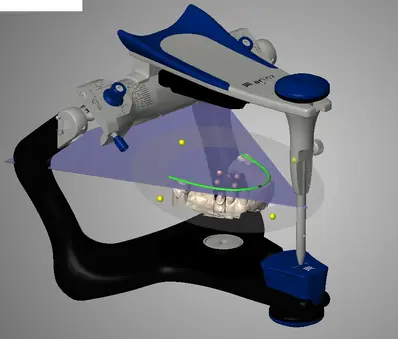
We attempt this with mechanical articulators. A great many articles, books and studies deal with their construction, types, different concepts and the effectiveness of those. It is not the aim of this piece to go into these in detail. :)
Like any dental laboratory device or machine, it helps our work most if it is precise, reliable and enables us to produce good-quality work in a verifiable way. However, even the most expensive, top-quality product only delivers the expected result if we use it with the appropriate knowledge and with care.
It has to be noted that no articulator is capable of fully imitating individual mandibular movements in every functional phase.
Briefly about this problem area in this article:
(as a curiosity, the figures appearing here were taken from the textbook of first-year German dental technician students)
http://www.dent-wiki.com/dental_technology/fully-adjustable-articulators-system-errors/
This will probably become possible in the digital space sooner than in the physical one.
Or is it already possible?
modjaw.com
Naturally, the more individual values we can model, the more accurate our work will be.
In this case, when we want to model an anatomical system with a mechanical device, we have to pay increased attention to certain geometric fundamentals.
If we do not register patient-specific values, then during articulation at average values the following are of help to us:
the incisal point
the Bonwill triangle
the occlusal plane
If we mount the models precisely at average values on this basis, we can model jaw movements later with a good approximation.
It is important that we know the limitations and errors of work carried out in an average-value articulator. Alongside incorrect mounting of the models, a frequent error is, for example, changing the bite height. While doing so the occlusal plane remains unchanged in the articulator, whereas in reality this plane shifts, and at the same time the distance between the plane and the joints and the angle they enclose also change, while in the articulator we are working on the basis of the original axis of rotation.
In this respect we can regard this knowledge as the professional minimum, since average-value articulation that is carried out incorrectly, or not carried out at all, will certainly result in lengthy adjustment in the practice.
After this we can finally start designing and creating...