Reproducible precision
What makes a stone model truly accurate?
Why does a restoration sit high in the mouth but not in the articulator?
How can lengthy adjustment in the practice be avoided?
What tools do we need for this?
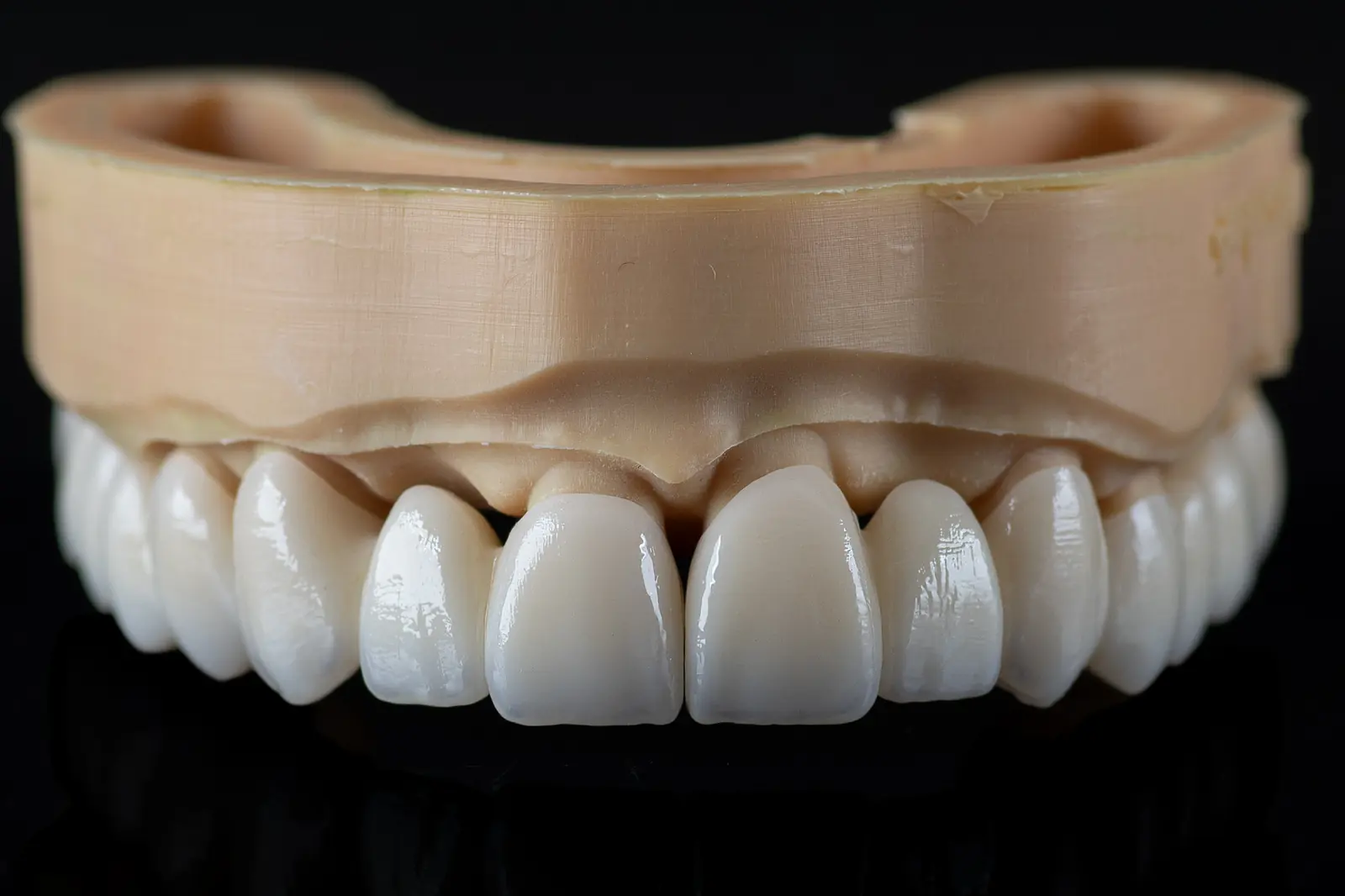
We have all encountered the phenomenon of a finished restoration being accurate on the stone model and in the articulator and meeting professional requirements, yet delivery running into difficulties. Bridges under tension, inaccurate occlusion, loose or overdimensioned contact surfaces — the most frequent problems with a fixed restoration.
What can we do in the dental laboratory to avoid these?
The bridge is under tension, it is hard to seat
The fit of restorations depends to a great extent on the accuracy of the stone models. Most errors can be caused by expansion of the plaster. In this case the problem is primarily to be found in model fabrication. Plaster of inadequate quality, faulty processing, an inaccurate model system — these can all cause trouble.
You can read more about model fabrication here: Let's start with the basics!
The crown or bridge sits high
A frequently occurring problem even with the smallest fixed restoration. Many people use many different methods to avoid it, but these are generally based on habit and on impressions developed over long working relationships. They can lead to a good result, but they are not reproducible in a new situation.
The video below presents a method that can be applied in every case:
It can be used with any sectioned model system, with an immediate side shift adjustment option on the articulator.
The contact points are not right
During sectioned model fabrication, information is lost in every case. The soft tissues around the prepared teeth are trimmed away when the preparation margins are defined. In addition, the sectioned parts can move slightly when restorations are seated, and can be forced apart in the case of overdimensioned approximal contact points.
Making a second model provides a solution to both problems. Alongside faithfully reproducing the soft tissues, it also helps with correctly adjusting the contact points. In my opinion, however, an adequate second model can only be made in the case of a shoulder preparation.
The conditions for consistently high-quality fixed restorations therefore have to be ensured already during model fabrication, by the following:
expert use of appropriate materials
a model system that eliminates plaster expansion
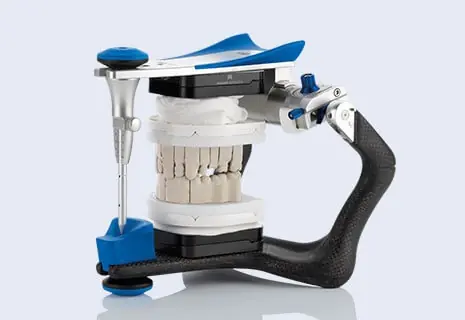
the use of appropriate articulators and the application of model management
checking on a second model